
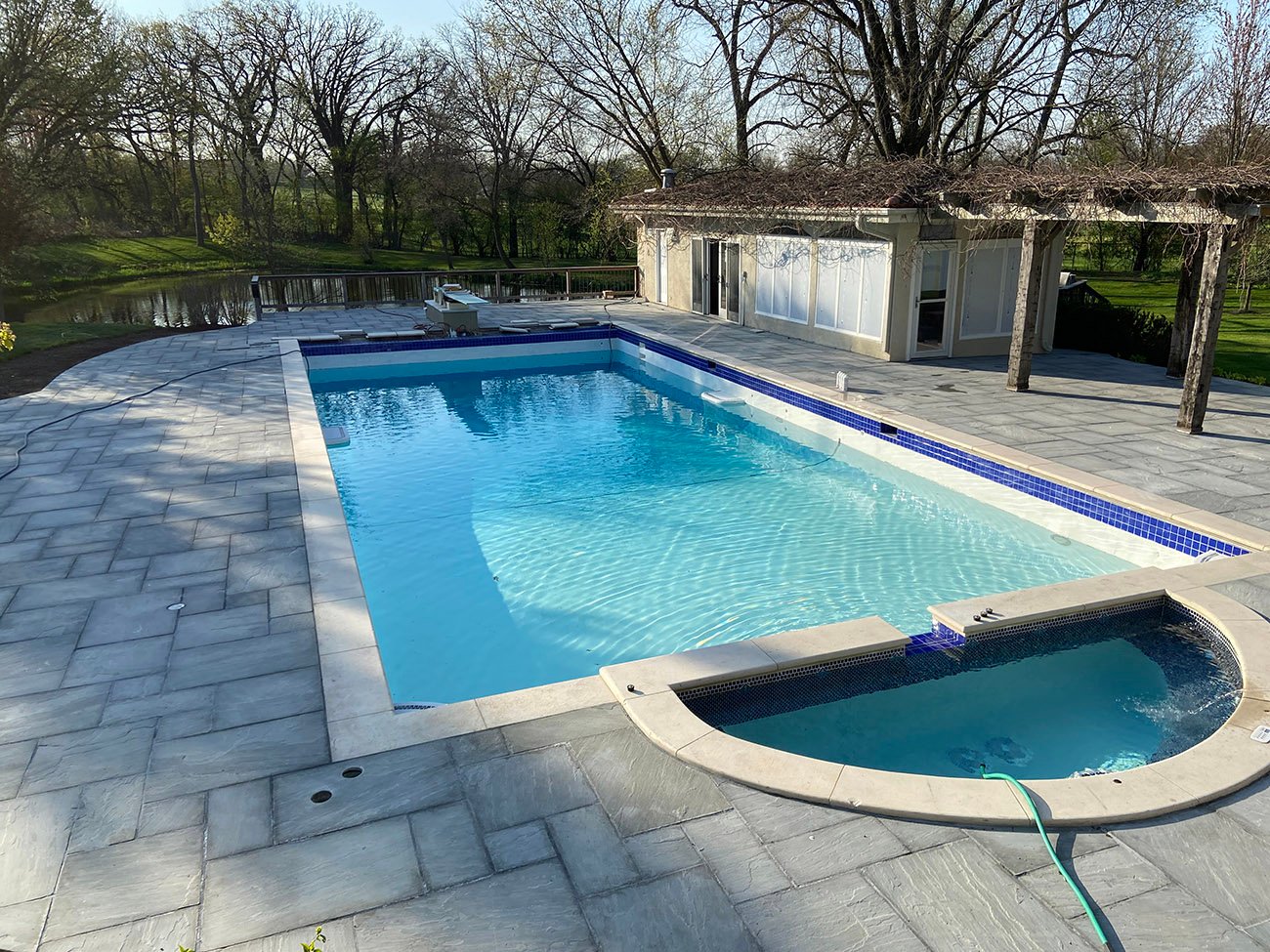
The Complete Guide to Inground Pool Renovation
The Complete Guide to Inground Pool Renovation
Last updated: November 2, 2026
Quick answer: Inground pool renovation updates a pool's interior surface, tile and coping, deck, equipment, and features. Most projects start with resurfacing once the finish is worn, which for plaster is roughly every 10 years. Budgets run from a few thousand dollars for equipment or tile work to $30,000 or more for a full renovation. Fix leaks and structural problems first, then the surface, tile, and coping, then the deck and equipment.
An outdated inground pool doesn't always need to be torn out and rebuilt. In most cases, a combination of resurfacing, new tile, a refreshed deck, and updated equipment makes an older pool safer, more efficient, and more enjoyable. This guide covers the main renovation options, what each typically costs, how long projects take, and which upgrades to prioritize, with a focus on pool owners in Chicagoland.
What Is an Inground Pool Renovation?
An inground pool renovation is any project that restores or updates an existing pool rather than building a new one. The terms renovation, remodel, and modernization are used interchangeably. The scope can be as small as replacing a worn pump or as large as resurfacing the pool, replacing tile and coping, rebuilding the deck, and adding new features. What matters is which parts of the pool you are changing, because that determines the order of work, the cost, and the timeline.
Signs Your Pool Needs a Renovation
- A worn or damaged surface. Rough patches, stubborn staining, chips, thin or peeling plaster, or a vinyl liner with wrinkles, fading, or tears.
- Water chemistry that won't hold. If you keep adding chemicals and the water still goes out of balance, the surface or a leak may be the cause.
- Cracked or loose tile and coping. These are cosmetic issues and also safety hazards, and they can signal bigger problems.
- Leaks. A pool should lose only about 1 to 1.5 inches of water a week to evaporation. Losing more suggests a leak.
- Aging equipment. Pumps, filters, and heaters that are failing, noisy, or inefficient.
- Missing safety features. Older pools may lack compliant drain covers, adequate lighting, secure steps, or a fence with a locking gate.
- A dated look. Even a sound pool may need a refresh if the finish, tile, or deck no longer suits your yard.
For a deeper checklist, see our post on whether your pool needs renovation.
Inground Pool Renovation Options and Typical Costs
Ranges below are general planning estimates. Actual quotes vary with pool size, materials, access, the condition of the pool, and the contractor.
| Renovation option | What it involves | When to consider it |
|---|---|---|
| Resurfacing | Replacing the interior finish with plaster, quartz, or pebble | Rough, stained, or thinning surface; plaster is typically redone about every 10 years |
| Vinyl liner replacement | Removing the old liner and installing a new one | Fading, wrinkles, tears, or leaks; liners typically last about 5 to 10 years |
| Tile and coping | Replacing waterline tile and the edge material around the pool | Cracked, loose, or outdated tile; best done during a resurface |
| Pool deck renovation | Repairing, resurfacing, or replacing the deck | Cracks, trip hazards, drainage problems, or a worn look |
| Equipment upgrades | New pump, filter, heater, or automation | Equipment is failing, inefficient, or about 10 years old |
| Safety and lighting upgrades | LED lighting, compliant drain covers, a safety cover, fencing | Older pools missing modern safety features |
| Structural changes and features | Changing the shape, adding steps, a spa, a tanning ledge, or water features | The pool no longer fits how you use it |
Choosing a Pool Interior Finish
Your pool type determines your options. Concrete pools are resurfaced with plaster, quartz, or pebble, vinyl liner pools get a new liner, and fiberglass pools are refinished rather than replastered. Our guide to fiberglass, vinyl liner, and concrete pools covers the differences.
| Finish | Durability | Cost level | Notes |
|---|---|---|---|
| White plaster | Shortest lifespan | Lowest | Traditional look; shows etching and staining first |
| Quartz | Mid-range | Middle | Holds color and resists staining better than plaster |
| Pebble | Longest lasting | Highest | Hard, textured finish; view samples wet before choosing |
| Vinyl liner | Replaced every several years | Lower upfront | Wide range of patterns; needs periodic replacement |
If you plan to stay in your home for years, a more durable finish often costs less over its lifetime even though it costs more upfront.
Pool Deck Renovation
The deck is the part of the pool area you see and walk on most. Common deck projects include repairing cracks, resurfacing worn concrete, replacing the deck with pavers or stamped concrete, and correcting drainage so water flows away from the pool. Slippery, uneven, or cracked decking is a safety issue as well as a cosmetic one. Because coping and deck edges connect, it makes sense to plan deck and coping work together.
Pool Modernization: What to Upgrade First
If your budget doesn't cover everything at once, this order makes sense for most pools:
- Safety and structural problems. Leaks, non-compliant drain covers, a cracked shell, or a missing fence come first, since they can cause the most damage and the most risk.
- The surface, tile, and coping. The shell should be finished before cosmetic work is added. Replacing tile and coping while the pool is being resurfaced costs far less than doing it as a separate project later.
- Equipment. Aging pumps, filters, and heaters are worth replacing at the same time, especially with a variable-speed pump and LED lighting. See our guide to eco-friendly inground pool upgrades for the energy-saving options.
- The deck. Repair or replace it once the pool itself is sound.
- Features. Add water features, a spa, a tanning ledge, automation, or a new cover last.
How Long Does a Pool Renovation Take?
A straightforward resurface with new tile and coping typically takes a few weeks. Projects that add structural changes, a new deck, or full equipment replacement take longer, and permits can add more time. The work generally follows this sequence: inspection and prep, repairs and structural work, plumbing and equipment, tile and coping, the interior finish, and then startup and water balancing. The first days after a new surface goes in affect how long it lasts, so careful startup and water chemistry are part of the job.
Draining a pool improperly can damage the shell, especially when the groundwater level is high, which is another reason to leave draining to professionals.
When to Schedule a Pool Renovation in Chicagoland
Surface and concrete work needs mild weather, so most Chicagoland renovations happen between spring and early fall. Contractors book up, which makes late fall and winter the best time to get inspections, compare quotes, and reserve a spot. If you want the pool ready for summer, plan to start early in the season, before swim season begins. Coordinating the project with your pool opening or closing can also save time. Our Chicagoland pool winterization and opening guide covers the seasonal timing.
Tips for Planning Your Renovation
- Start with an inspection so you know the condition of the shell, plumbing, and equipment.
- Get written quotes that list the scope, materials, timeline, and warranty.
- Confirm the contractor's licensing, insurance, and references.
- Ask whether permits are required and who handles them.
- Decide what to bundle. Doing related work together usually costs less than separate projects.
- Plan for ongoing maintenance, since regular care protects the new surface and equipment.
Pool Renovation Help in Chicagoland
AAA Pool Service helps pool owners across Chicago's North Shore and Northwest suburbs keep their pools in good condition and plan updates. If you think it's time to update your inground pool, or you need a hand keeping up with weekly pool maintenance, contact our team today.
Inground Pool Renovation FAQs
What renovation options are available for an outdated inground pool?
The main options are resurfacing the interior, replacing a vinyl liner, replacing tile and coping, renovating the deck, upgrading equipment, adding safety features and lighting, and making structural changes such as new steps, a spa, or water features. Most projects combine several of these.
How much does it cost to renovate an inground pool?
Costs depend on scope. A refresh with new equipment and lighting may run $2,000 to $8,000, a mid-range project with resurfacing and new tile and coping typically runs $10,000 to $30,000, and a full renovation can reach $30,000 to $60,000 or more. Pool size, materials, and the condition of the pool all affect the price.
How often does an inground pool need to be resurfaced?
Plaster typically needs to be redone about every 10 years, depending on water chemistry and care. Vinyl liners generally last about 5 to 10 years. Rough texture, staining, chipping, or water chemistry that won't hold are signs it's time.
Should I replace the tile and coping when I resurface?
In most cases, yes. The pool is already drained and the waterline is exposed, so replacing tile and coping during the resurface costs much less than a separate project later, and it avoids pairing a new finish with old, worn tile.
How long does a pool renovation take?
A simple resurface with tile and coping usually takes a few weeks. Projects with structural work, a new deck, or full equipment replacement take longer, and permits can add time.
When is the best time to renovate a pool in Chicago?
Most work happens between spring and early fall, when the weather is mild enough for surface and concrete work. Late fall and winter are the best times to get inspections, compare quotes, and book a start date.
Is it worth renovating an old pool or should I build a new one?
Renovating is usually less expensive than building new, and it can bring an older pool close to the performance and look of a new one. A new pool may make sense if the shell has major structural damage or the layout no longer works for your yard. An inspection will show which route fits.
What should I upgrade first?
Start with safety and structural problems such as leaks and non-compliant drain covers. Next, handle the surface, tile, and coping, then equipment, the deck, and finally added features.
