
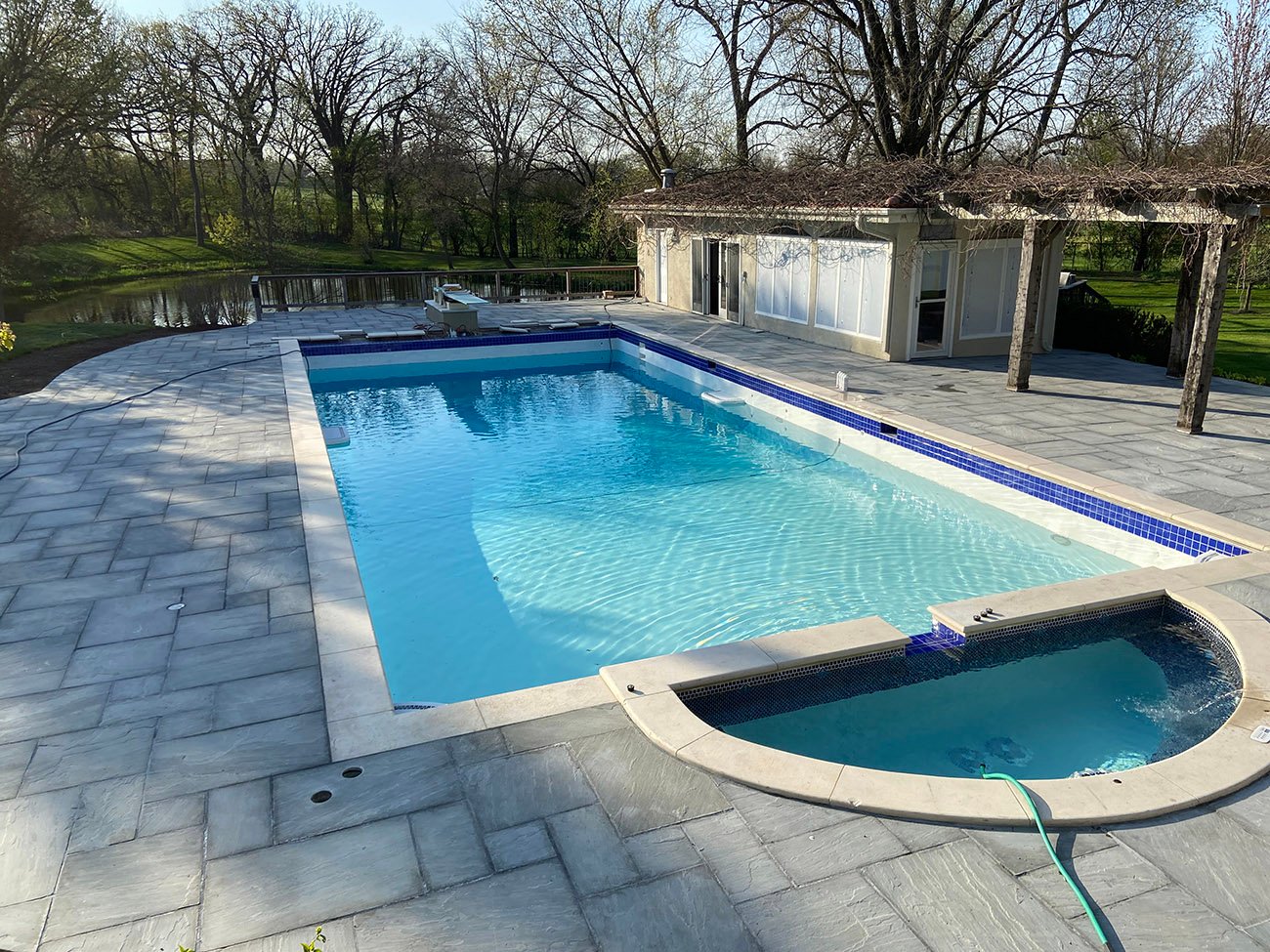
Eco-Friendly Inground Pool Upgrades for 2026
Last updated: October 23, 2026
Quick answer: The most practical eco-friendly inground pool upgrades are a variable-speed pump, a pool cover, LED lighting, and a solar or heat pump heater, paired with balanced water, leak checks, and regular maintenance. Together they reduce electricity use, evaporation, and chemical demand. Start with the low-cost changes, then add equipment upgrades when your current gear needs replacing.
A pool uses water, electricity, and chemicals, but how much depends largely on how it is equipped and maintained. For Chicagoland inground pool owners, the swim season is short, so the goal is to get the most out of it with the least waste. This guide covers what makes an inground pool eco-friendly, which upgrades are worth considering, and how to prioritize them.
What Makes an Inground Pool Eco-Friendly?
An eco-friendly inground pool uses less energy, wastes less water, and relies on fewer chemicals than a conventionally run pool. Those savings usually come from three things: efficient equipment, covering and sealing the pool to hold in water and heat, and consistent maintenance that prevents problems before they require draining or heavy chemical treatment. Most of these changes also lower operating costs over time.
Eco-Friendly Pool Upgrades at a Glance
| Upgrade | What it reduces | Upfront cost | Chicagoland note |
|---|---|---|---|
| Pool cover | Evaporation, heat loss, debris, chemical use | Low to moderate | Pays off all season; a solid cover also helps with winter closing |
| Variable-speed pump | Electricity | Moderate | Often the biggest energy saver for the equipment pad |
| LED pool lighting | Electricity | Low to moderate | Longer-lasting than older incandescent lights |
| Solar or heat pump heating | Gas or electric heating costs | Moderate to high | Can extend the season in spring and fall; output drops in cold weather |
| Cartridge filter | Backwash water | Moderate | No backwashing; cartridges are cleaned by rinsing |
| Automatic cleaner | Chlorine demand | Moderate | Keeps debris from breaking down in the water |
| UV or ozone system | Chlorine demand | Moderate to high | Supplements chlorine; does not replace it |
Energy-Efficient Pool Equipment
Variable-speed pump. The pump is typically the biggest electricity user on a pool. A variable-speed pump runs at lower speeds for most of the day and uses far less power than a single-speed model doing the same job. Federal efficiency standards that took effect in 2021 mean most new replacement pumps are variable-speed, so this upgrade often happens when an old pump fails. Run the pump on a schedule that matches your pool's circulation needs, and if your utility offers time-of-use rates, shift run time to off-peak hours.
LED lighting. LED pool lights use less electricity than older bulbs and last longer. If you light the area around the pool, low-voltage or LED fixtures save energy there too.
Better filtration. A filter that removes more debris in less time reduces run time and chemical demand. Cartridge filters also avoid the water loss that comes with backwashing sand or DE filters.
Solar Pool Heating and Heat Pumps
Heating is the largest energy cost for pools that are heated. Solar pool heating uses the sun to warm water at little operating cost, and electric heat pumps move heat from the air into the water rather than generating it, which typically uses much less energy than a gas heater. In Chicagoland, both work best from late spring through early fall, so they are better at extending the season than at heating a pool in cold weather. A cover helps either option work better. For a closer look, read whether a solar pool cover is worth it.
Pool Water Conservation
- Cover the pool when it is not in use. Evaporation is the main way pools lose water and heat.
- Add windbreaks. Fences, hedges, or landscaping around the pool slow evaporation.
- Fix leaks promptly. A pool that keeps needing top-offs may have a leak in the shell, plumbing, or equipment.
- Keep the water balanced. Water that stays in balance rarely needs to be partially drained or heavily treated.
- Reduce backwashing. Backwash only when needed, or switch to a cartridge filter.
Eco-Friendly Pool Maintenance and Fewer Chemicals
The best way to reduce chemical use is to keep the pool clean and balanced so chlorine does not have to work as hard. Skim and empty baskets regularly, keep leaves and debris away from the pool, and use an automatic cleaner for consistent cleaning. Keeping chlorine in range also prevents the algae problems that require shock treatments, as covered in our guide to preventing pool algae.
Ozone and ultraviolet systems destroy contaminants as water passes through them, which can lower chlorine demand. They are supplements, though, and most pools still need a chlorine residual for ongoing sanitation. Saltwater systems generate chlorine from salt rather than eliminating it, and they bring their own considerations, such as effects on certain stone and metal surfaces.
Where to Start: A Practical Order
- Start with no-cost and low-cost habits: balanced water, regular cleaning, a leak check, and a sensible pump schedule.
- Add a cover to cut evaporation and heat loss.
- Replace aging equipment with efficient models: a variable-speed pump, LED lights, and a better filter.
- Consider heating upgrades such as solar or a heat pump if you want a longer season.
- Add UV or ozone if you want to reduce chlorine demand further.
Many pool owners schedule upgrades around opening and closing. Our Chicago pool winterization and opening guide covers timing.
Eco-Friendly Pool Service in Chicagoland
AAA Pool Service helps pool owners across Chicago's North Shore and Northwest suburbs with regular maintenance, equipment questions, and pool openings and closings. For more information, and to learn about scheduling weekly pool maintenance, contact AAA Pool Service today.
Eco-Friendly Inground Pool FAQs
What makes an inground pool eco-friendly?
An eco-friendly inground pool uses less energy, water, and chemicals than a typical pool. That comes from efficient equipment such as a variable-speed pump, a cover to reduce evaporation and heat loss, and regular maintenance that keeps the water balanced.
What is the most energy-efficient upgrade for an inground pool?
A variable-speed pump is usually the biggest energy saver because the pump is typically the largest electricity user in the pool system. A cover and efficient heating add further savings.
Is solar pool heating worth it in Chicago?
It can be, mainly for extending the swim season in late spring and early fall. Solar heating works best in sunny, warm weather and does less in cold conditions, so it is best viewed as a season extender, ideally paired with a cover.
How can I conserve water in my inground pool?
Use a cover, add windbreaks, fix leaks quickly, keep the water balanced, and avoid unnecessary backwashing. Evaporation is the main source of water loss, so covering the pool has the biggest effect.
Do UV and ozone systems replace chlorine?
No. They can reduce how much chlorine a pool needs by destroying contaminants, but most pools still need a chlorine residual to stay sanitized.
Are saltwater pools more eco-friendly?
Not necessarily. A saltwater system generates chlorine from salt rather than removing chlorine, and it can affect some stone, metal, and equipment. Whether it fits depends on your pool and priorities.
Do eco-friendly pool upgrades save money?
Many do. Efficient pumps, lighting, and covers lower electricity, heating, and water costs over time, though payback depends on the equipment you replace, your usage, and local energy rates.
